Budgeting accounts
Around 47,000 accounts had one or more incomes set up and were using budgeting.
Case study
Turning a complex budgeting service into a clearer product experience, while helping more customers understand, set up and get value from it.
Head of Design
Activation, budgeting setup and UX
thinkmoney SmartBudget
Product thinking, research synthesis, journey design, prioritisation and design direction
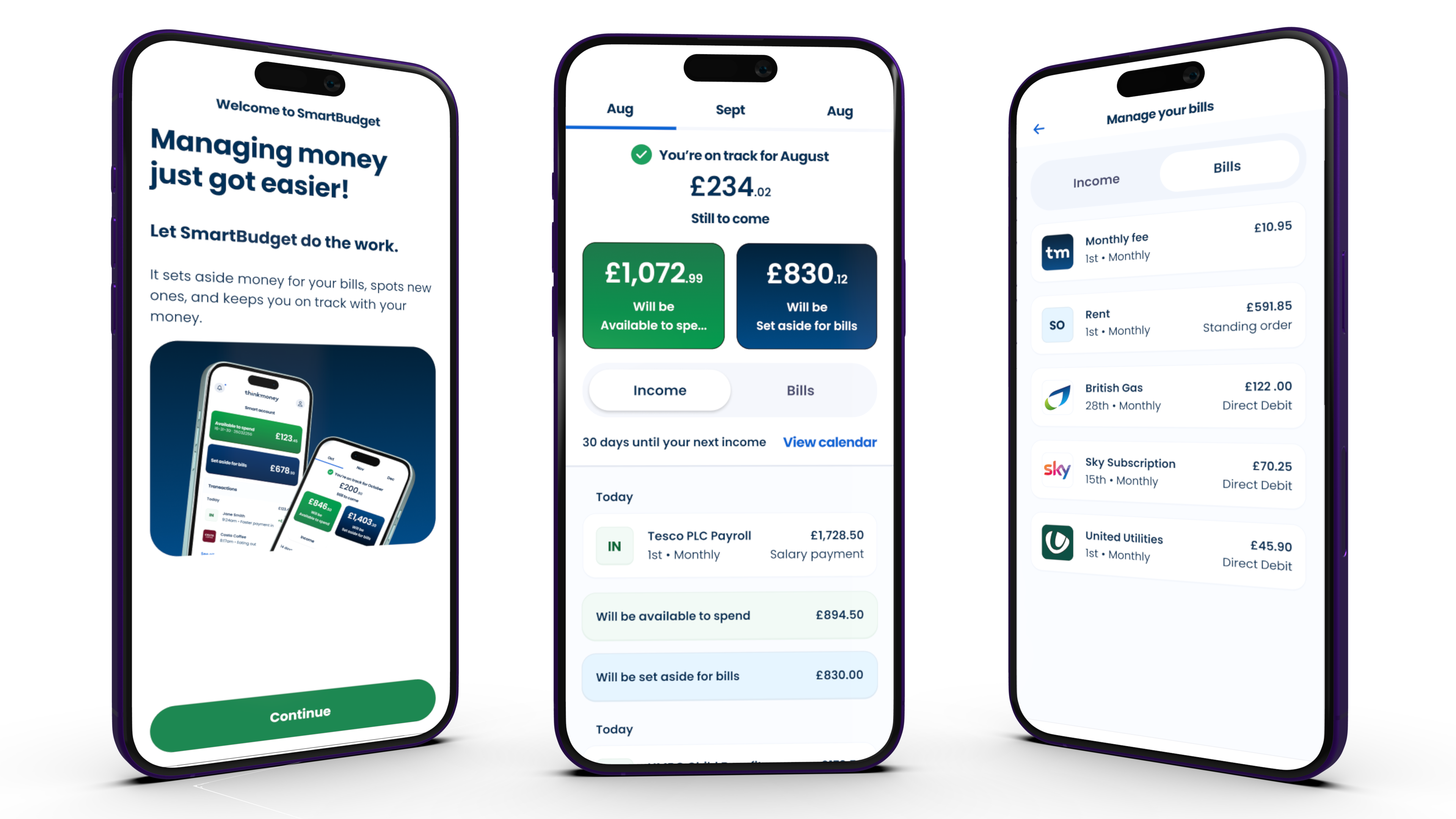
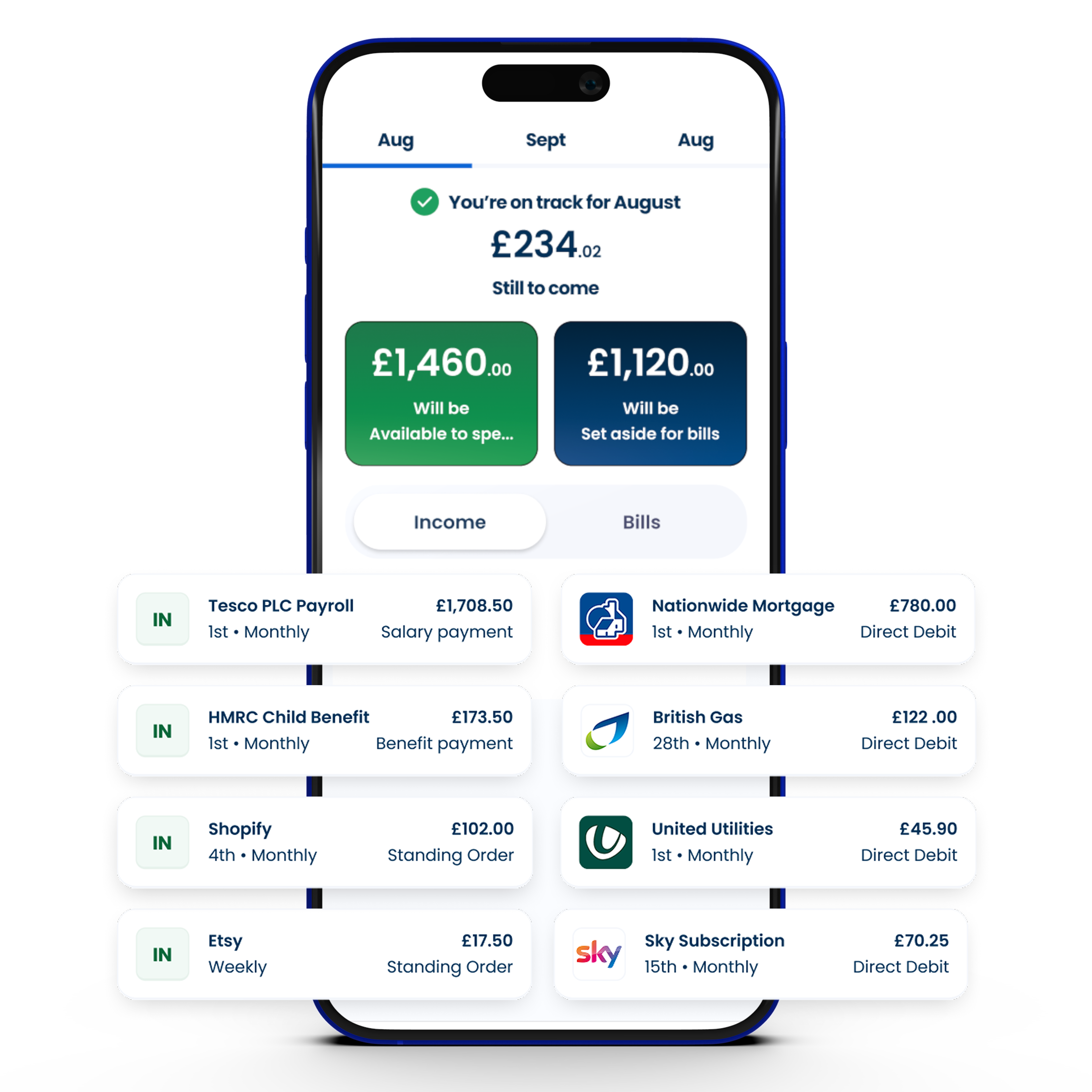
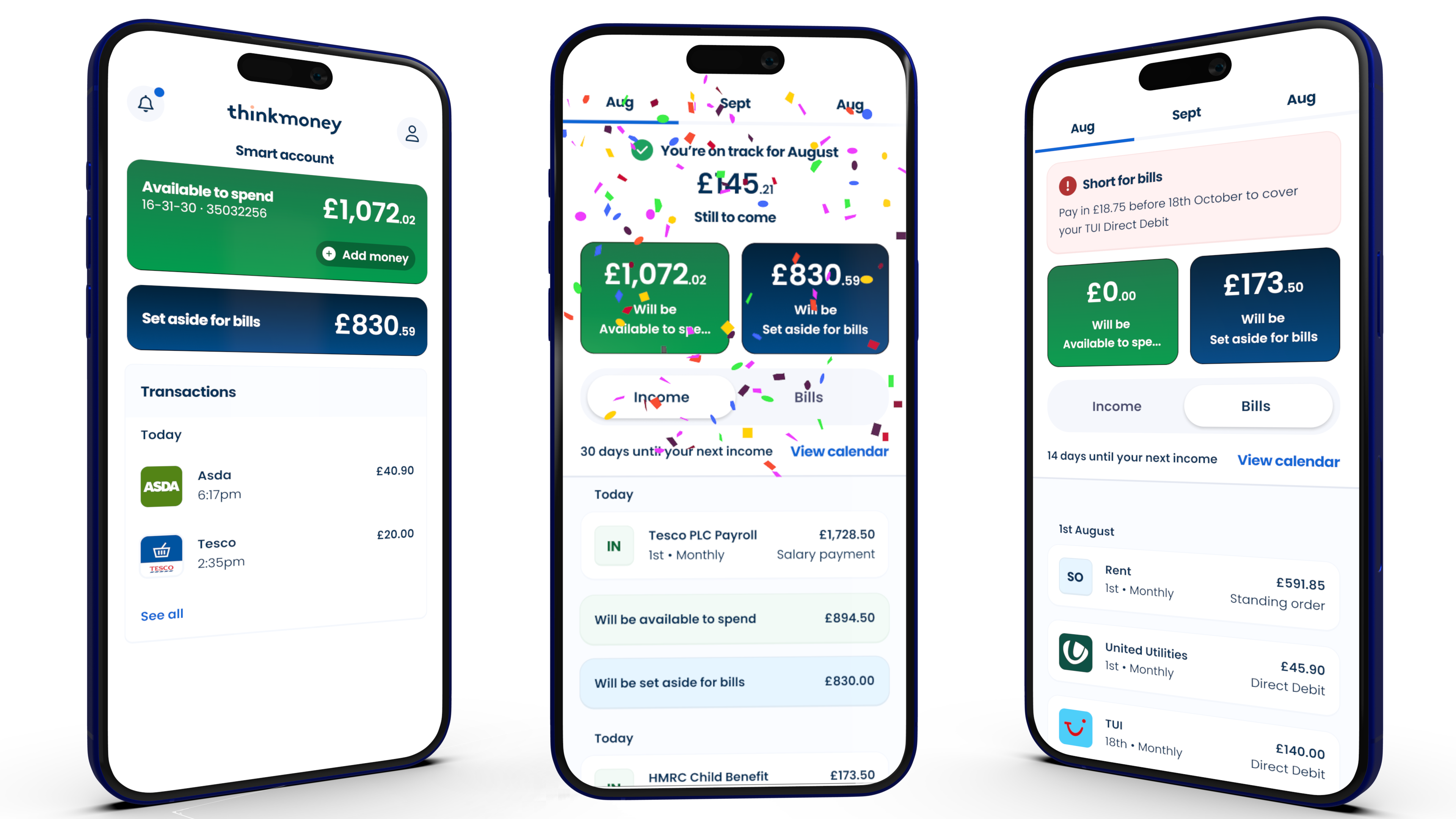
SmartBudget uses regular income and payment information to forecast ahead, set money aside for bills and show customers what should remain available to spend.
I worked across the experience as we moved from fixing immediate post-launch issues towards a broader question: how could we make budgeting easier to understand, easier to set up and more likely to become part of a customer's everyday account?
Around 47,000 accounts had one or more incomes set up and were using budgeting.
Satisfaction was strong amongst customers already using the service.
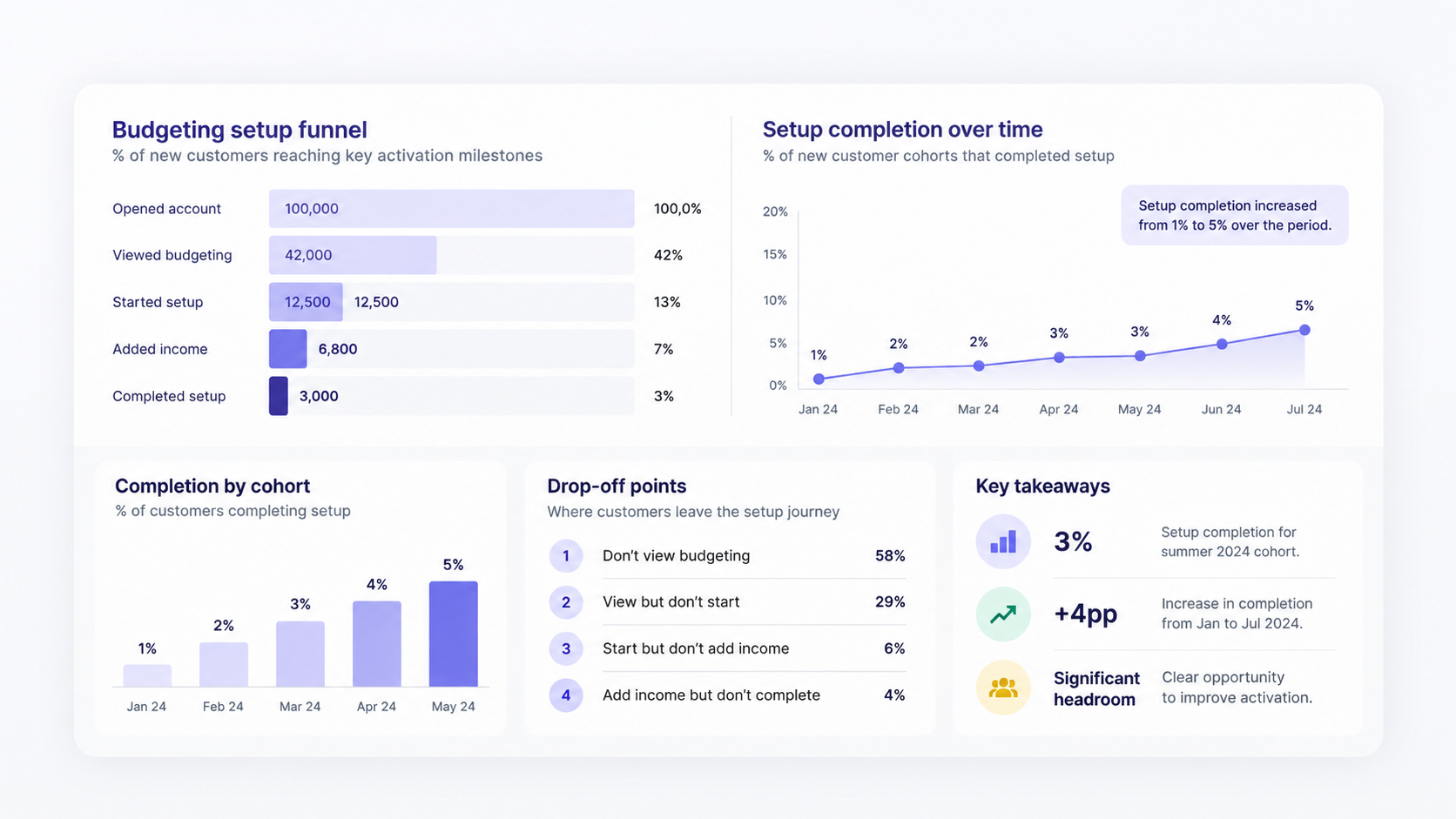
Only 3% of the summer 2024 onboarding cohort completed budgeting setup.
Multiple incomes, payment schedules, matching rules, shortfalls and changing payment dates could all affect what customers saw.
The challenge was making the outcome clear without asking customers to understand the complexity behind it.
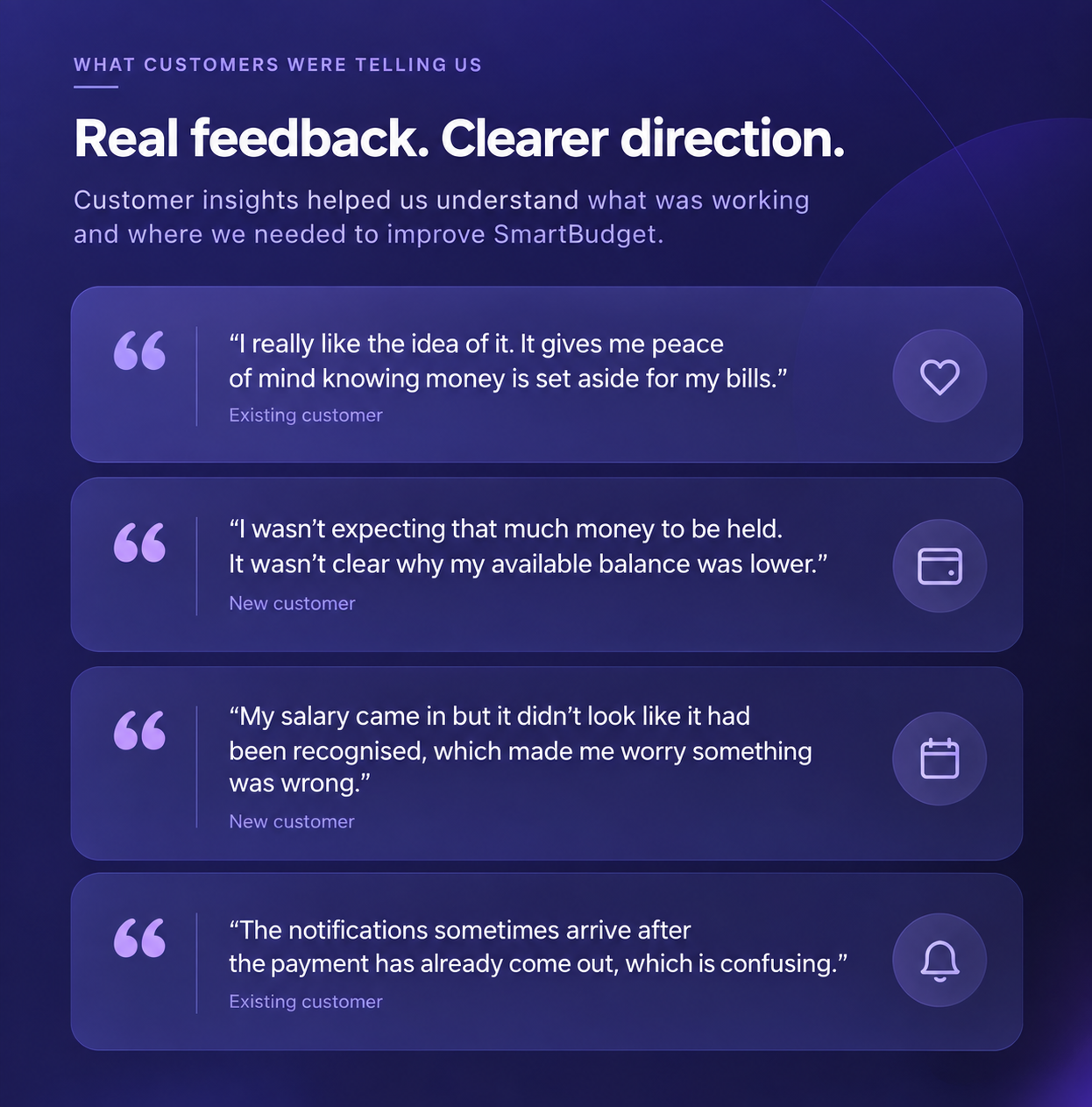
Customers reported more money being set aside for bills than they expected.
The relationship between money reserved for bills and money available to spend wasn't always obvious.
Matching issues could make the product behave as though expected income hadn't arrived.
Delayed messages left customers unsure whether payments or money movements had completed.
Customers found the app easy to navigate, responded positively to the visual design and liked important information being surfaced on the homepage.
But balances, regular payments and understanding when incoming money became available exposed where the product's internal logic was creating customer uncertainty.
Combine customer feedback, complaints, behavioural data and operational insight.
Look beyond individual screens at proposition, communication and product behaviour.
Cluster the evidence and identify the areas most important to investigate.
Establish setup metrics so future changes could be judged against behaviour.
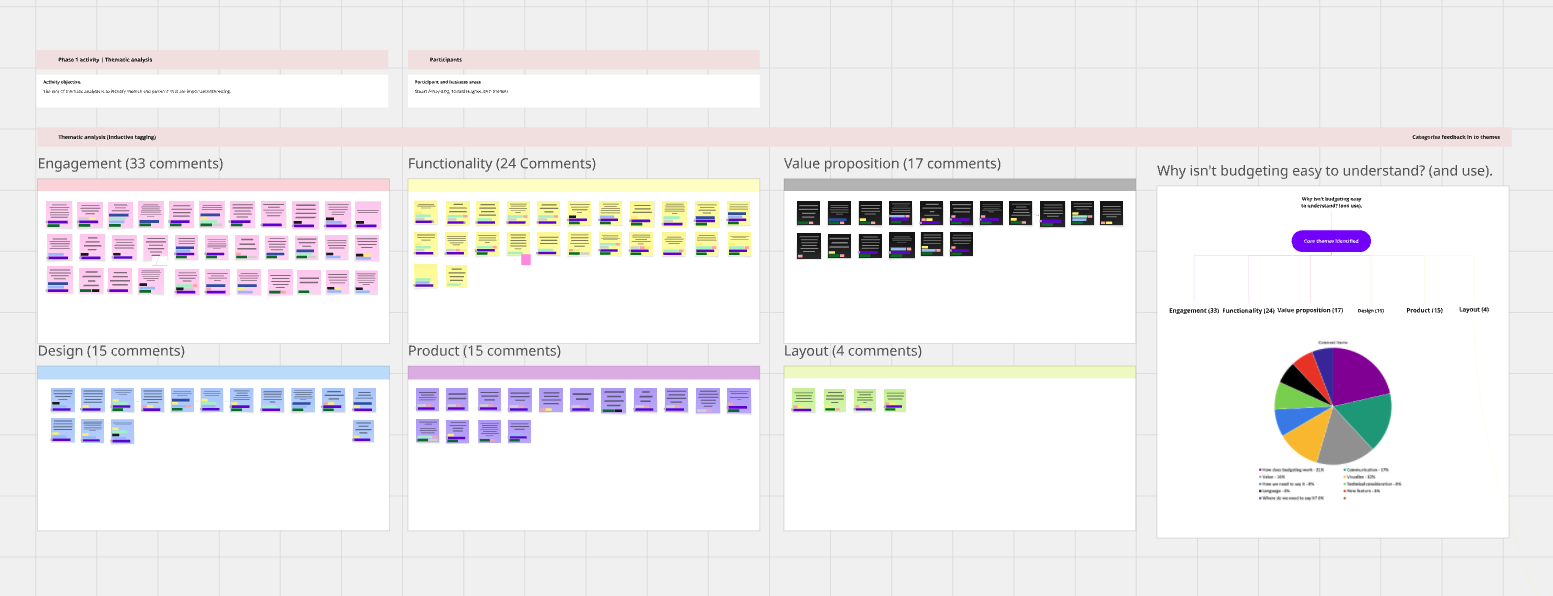
I helped structure a cross-functional workshop around how customers understood budgeting, what they needed to complete setup and how the product could create longer-term value.
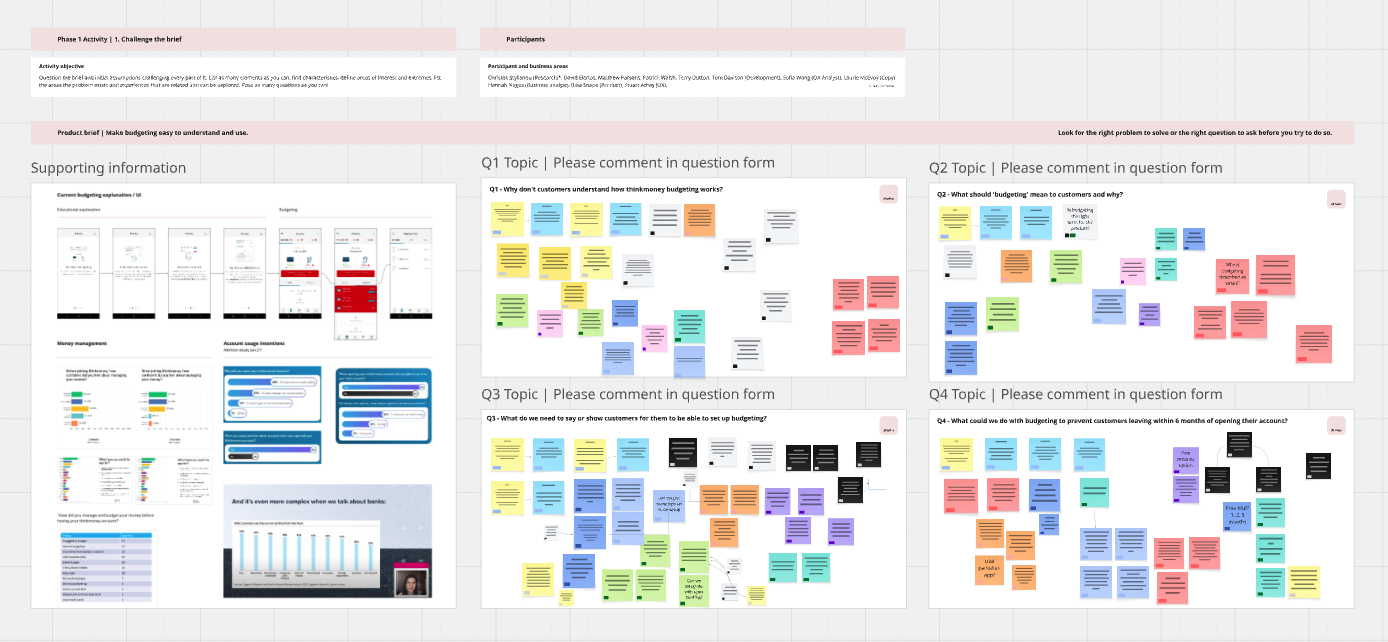
Ideas clustered around engagement and functionality, followed by value proposition, design and product. Layout was only a small part of the problem.
Make the benefit of budgeting clear before asking customers to configure it.
Introduce budgeting at the right point and make progress through setup obvious.
Make payment movement and budgeting outcomes clearer without exposing the underlying system.
Use existing account and payment data wherever possible rather than asking customers to recreate it.
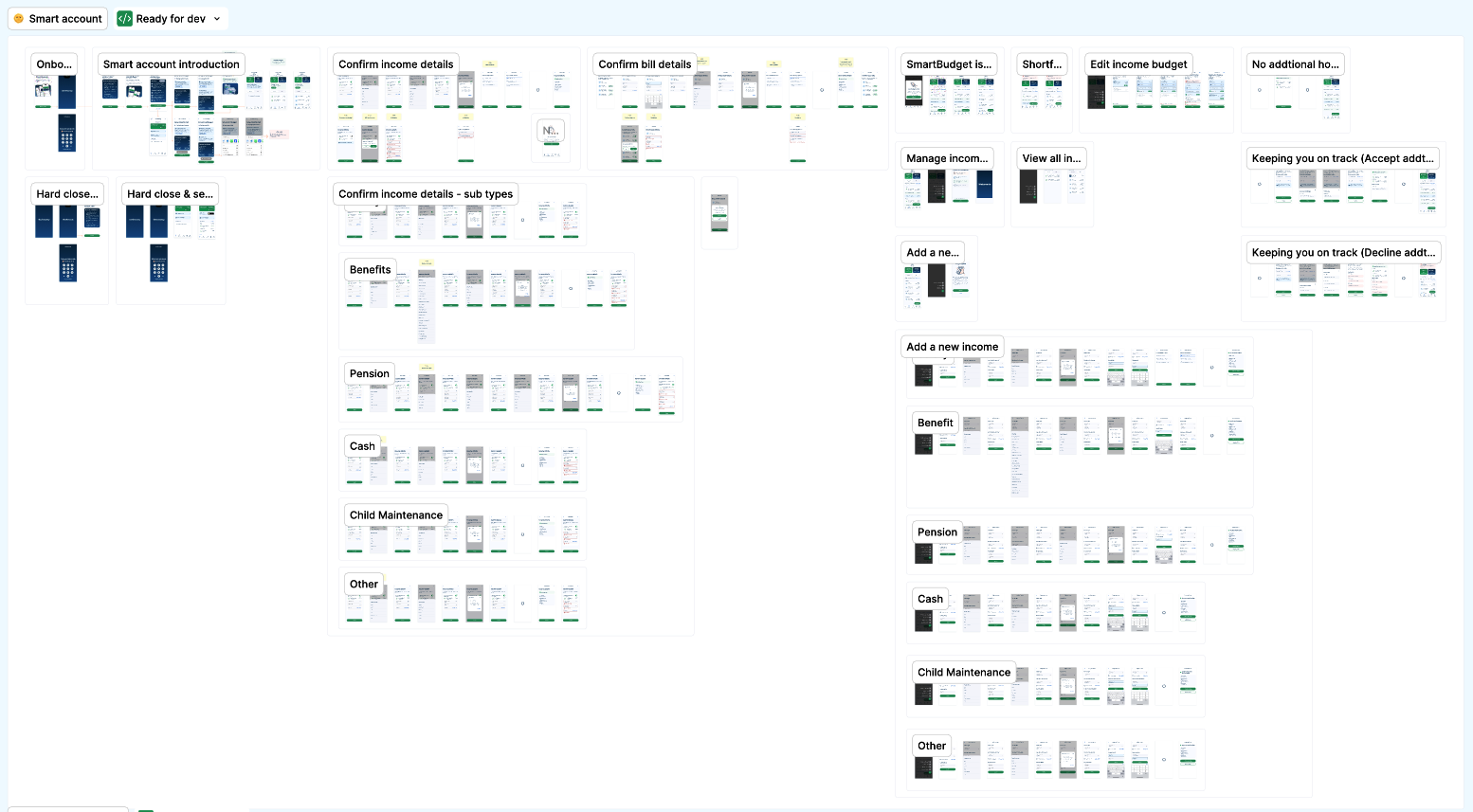
In July 2024 a dedicated setup journey introduced Learning Mode, giving customers a clearer structure for moving towards an active budget.
Later work gave customers more choice over how they entered information, including individual incomes and bills rather than only overall amounts.
Instead of judging individual screens, we measured how new customers progressed through onboarding and budgeting setup as cohorts.
Funnel and cohort views in Power BI gave the team a foundation for deciding what to improve next and judging whether future changes moved customer behaviour.
Proposed medium-term target for budgeting setup completion.
Proposed longer-term ambition as the experience matured.
A framework for tracking activation over time rather than isolated snapshots.
SmartBudget could easily have become an endless sequence of small UX fixes. Stepping back showed a bigger opportunity: customers who used budgeting were broadly satisfied, but too few new customers were successfully getting through setup.
That changed the conversation from improving isolated screens to improving activation, and gave the team a measurable way to judge the product over time.